Home | Canal System | Historical Documents | 175th Anniversary | Images | Maps | Tour | Traces | Locks | Boats | Books and Videos | Music | Links

 The Lockport Locks:
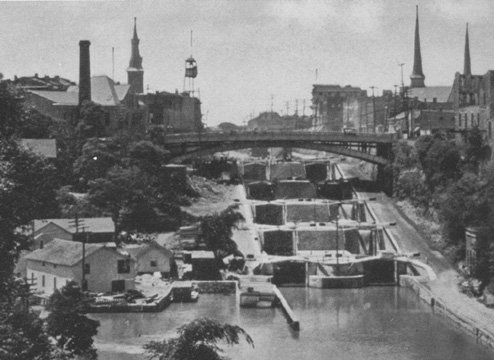
The 60 foot rise in the Niagara Escarpment presented a major engineering problem during the construction of the original Erie Canal (1817-25). It was solved by Nathan S. Roberts, who designed a double set of five combined locks; one for ascending traffic heading west and another for descending traffic heading east. Each lock was 90 x 15 feet and had a lift of 12 feet.
The first enlargement of the Erie Canal took place between the years 1835 and 1862. The engineer in charge was Thomas Evershed. At this time, the canal prism was extended and the locks at Lockport were increased from their original size to 110 feet x 18 feet. This allowed an increase in the tonnage of canal boats from seventy-five to two-hundred-forty.
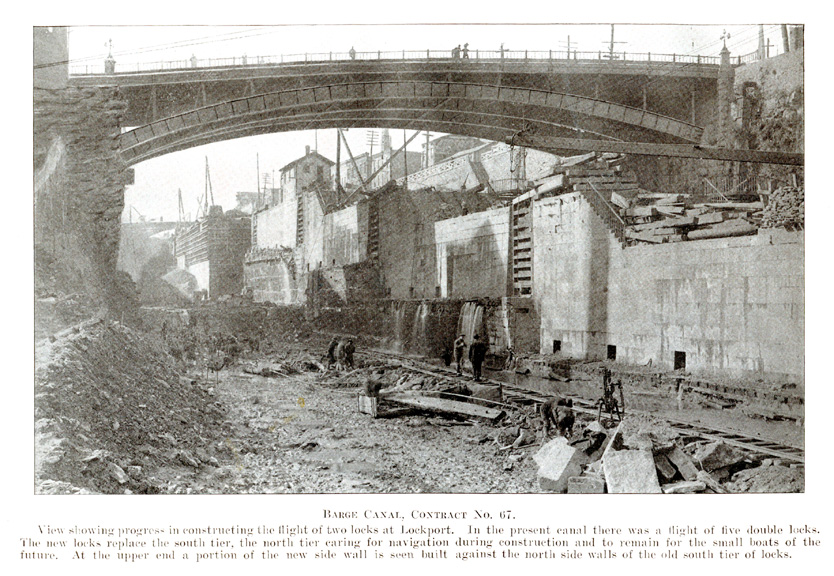
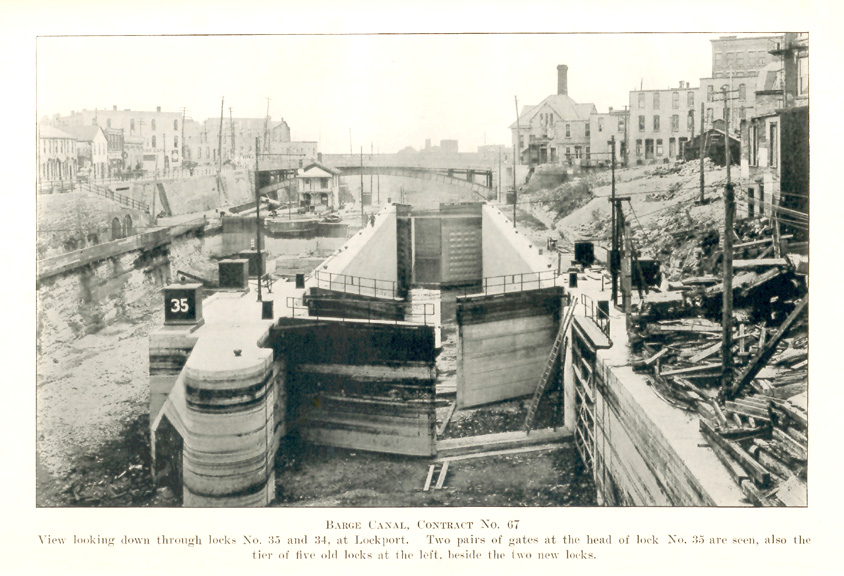
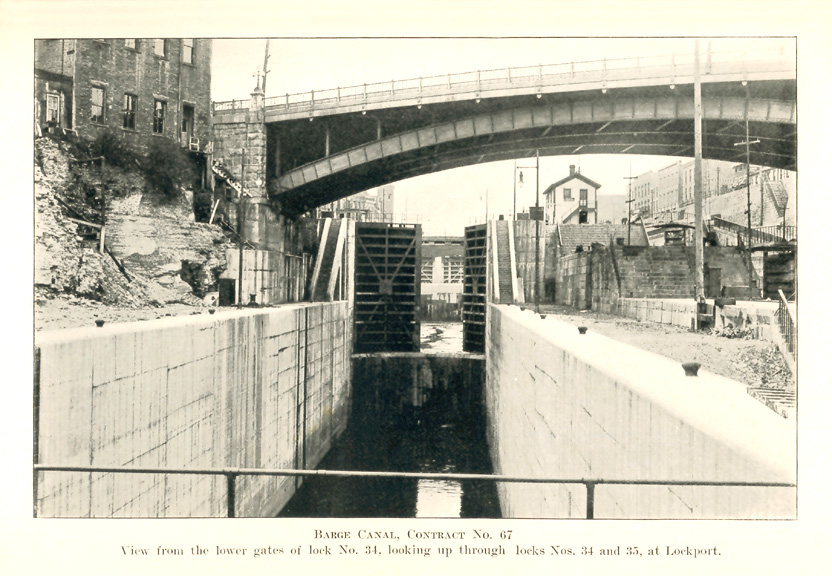
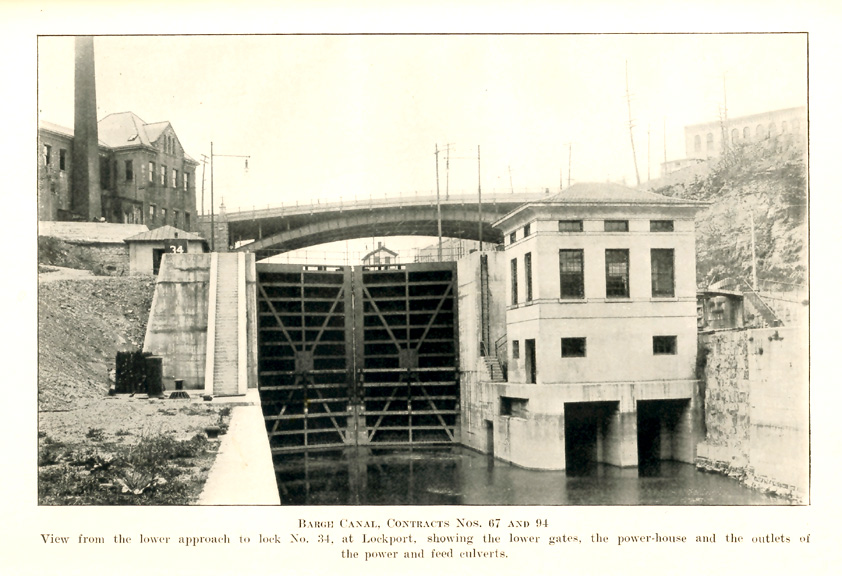
From the years 1909 to 1918, the Erie Canal was modified to become the New York State Barge Canal. The southern tier of the locks at Lockport were removed, and in their place was constructed a set of two electric lift locks. These concrete locks with steel gates were 310 feet x 45 feet x 12 feet, and had a combined lift of 49 feet. The water gates of the northern tier of locks were removed so the locks could be used for the passage of surplus water.
(From the Historic American Engineering Record, National Park Service, Department of the Interior, HAER no. NY-61).
 |
![Original Locks at Lockport [1825]](images/Lockport-1/Lockport-1825.jpg) |
 |
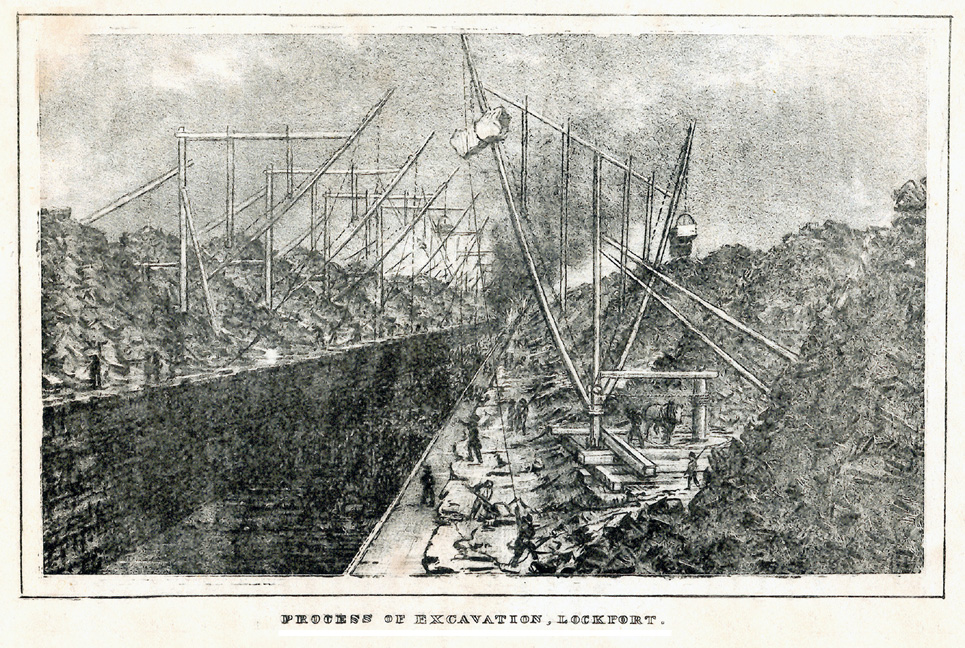
| "Method of Excavating the Original Canal, West of Lockport" -- facing p. 26. See also the Original image from Colden's Memoir, facing p. 298. | "Original Locks at Lockport [1825]" -- facing p. 12. |
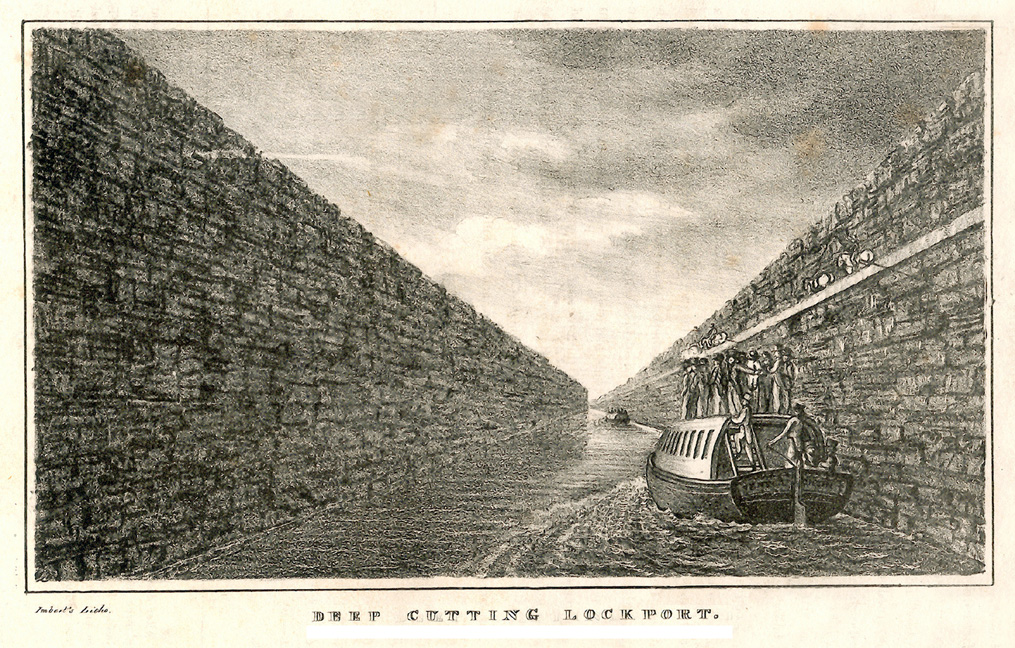
"Deep Cutting Lockport" [looking west] -- from: Memoir,
prepared ...by Cadwallader D. Colden (New York : Printed by order of the
Corporation of New York, 1825) ; facing p. 299. -- Note the height of the towpath on the right (north) side. |
| -- both from Annual Report of the State Engineer and Surveyor of the State of New York for the fiscal year ended September 30, 1915 (Albany : J. B. Lyon Co, printers, 1916). | ||
 |
 |
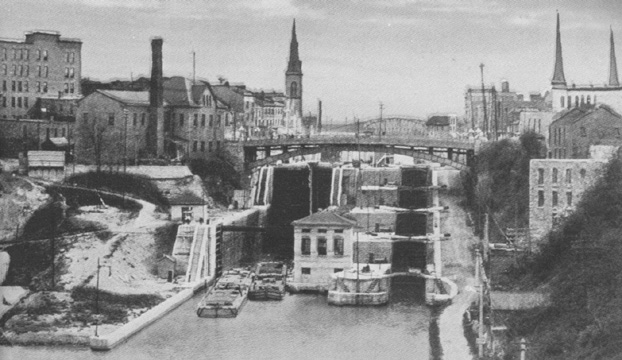 |
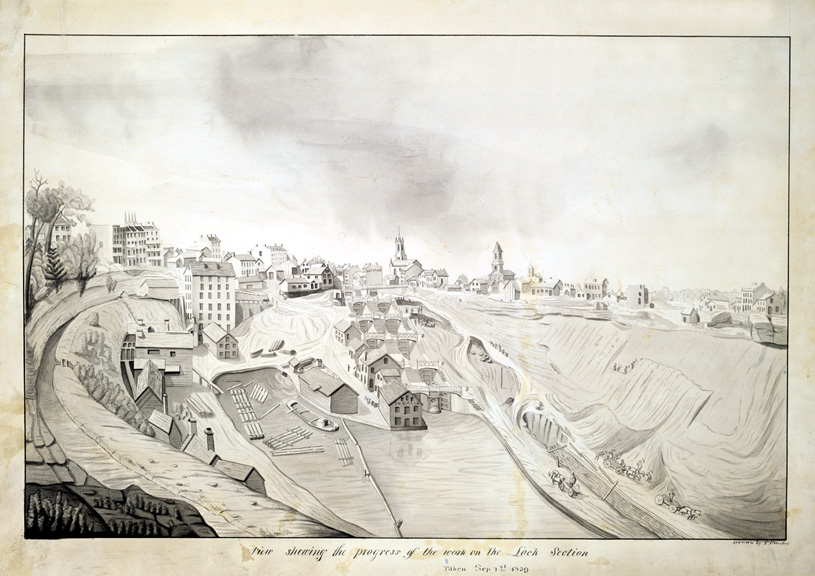
| "View showing the progress of the work on the Lock Section, Taken Sep. 1st 1839" | The enlarged locks, 1836-1862 | The reconstructed locks, 1909-1918 |
 |
 |
 |
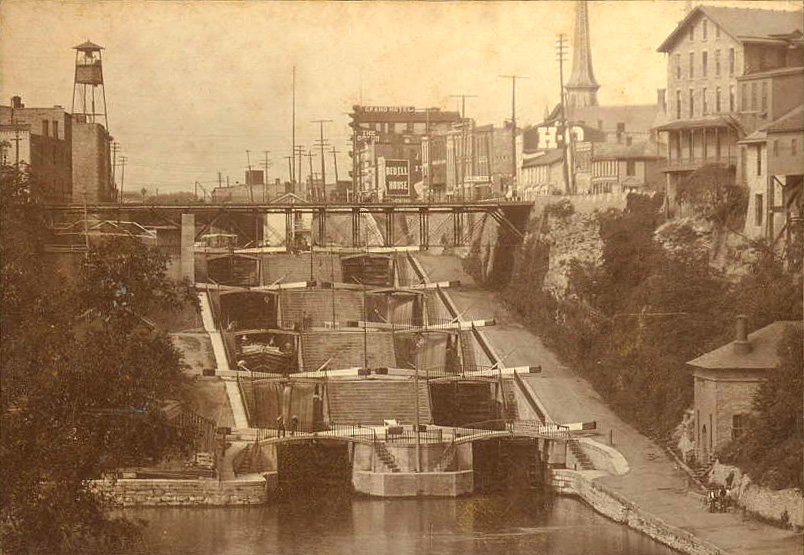
| Photograph of the Lockport Locks -- approximately 1880. |
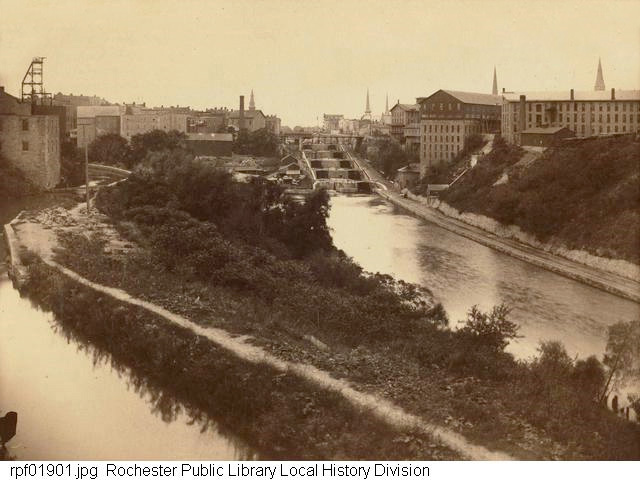
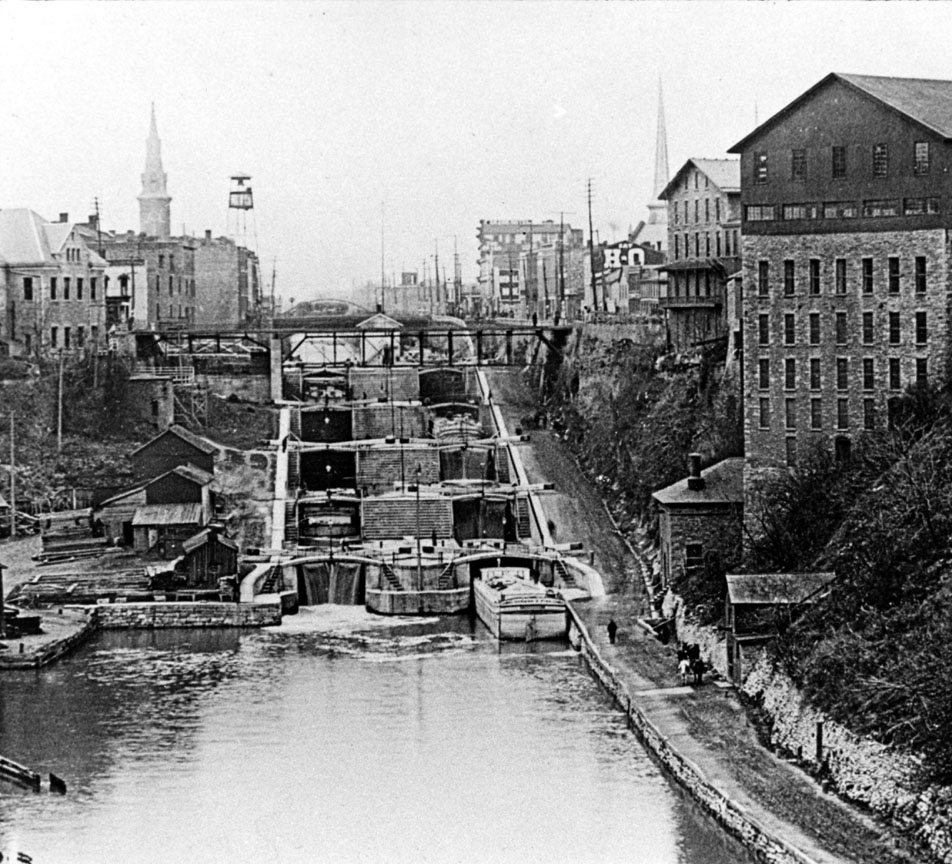
Erie Canal locks at Lockport -- 1880-1910? (from: Rochester Images of the Central Library of Rochester and Monroe County) |
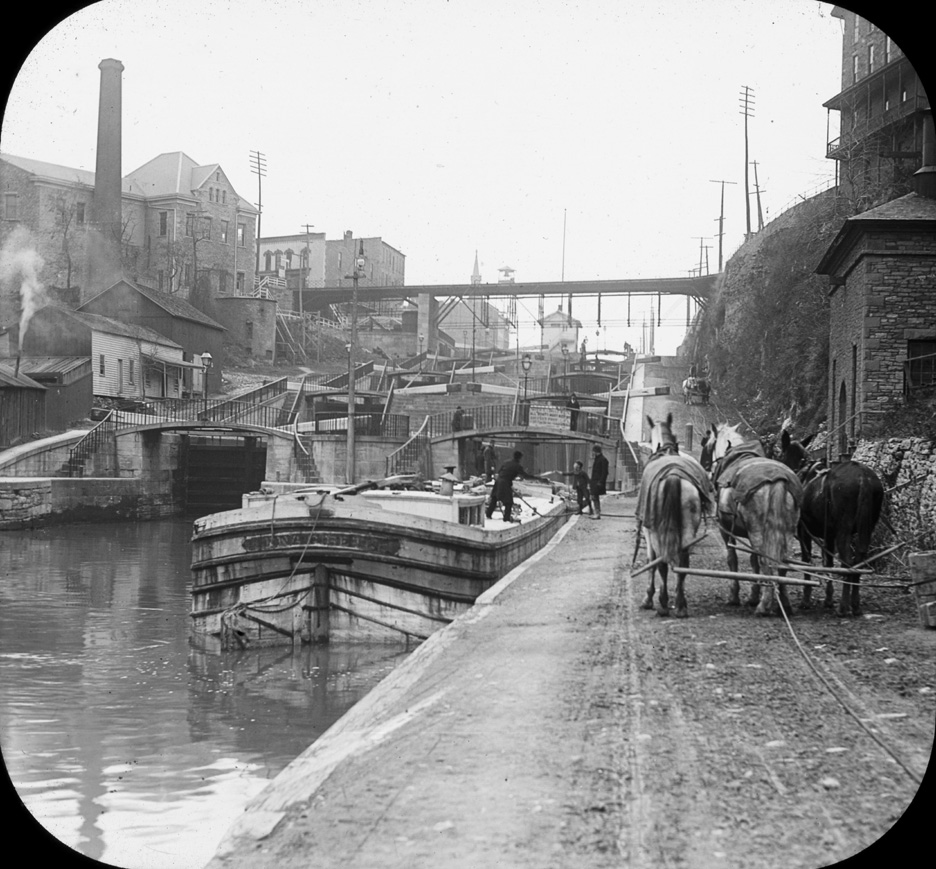
Close-up view of a stairstep series of locks on the Erie Canal at Lockport, New York, 1880-1910? (from: New York State Archives, Education Dept., Division of Visual Instruction) |
 |
 |
 |
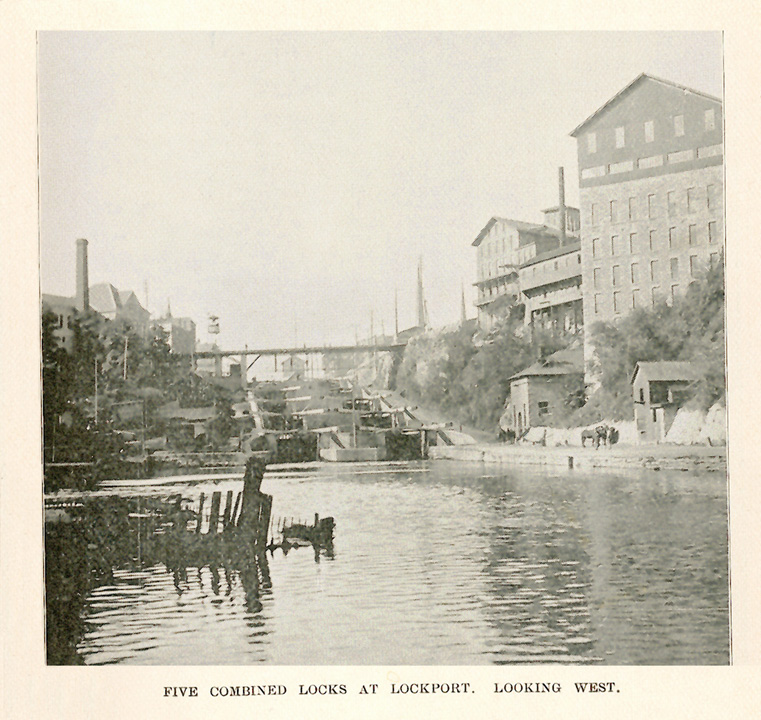
| "Five combined locks at Lockport" -- preceding p. 25 |
"Five combined locks at Lockport, looking west" -- following p. 28 |
Erie Canal locks and towpath, Lockport, 1895. (from: New York State Archives, Education Dept., Division of Visual Instruction) |
| [both from: Annual Report of the State Engineer and Surveyor of the State of New York for the fiscal year ending September 30, 1894 (Albany : James B. Lyon, state printer, 1895)] | ||
 |
 |
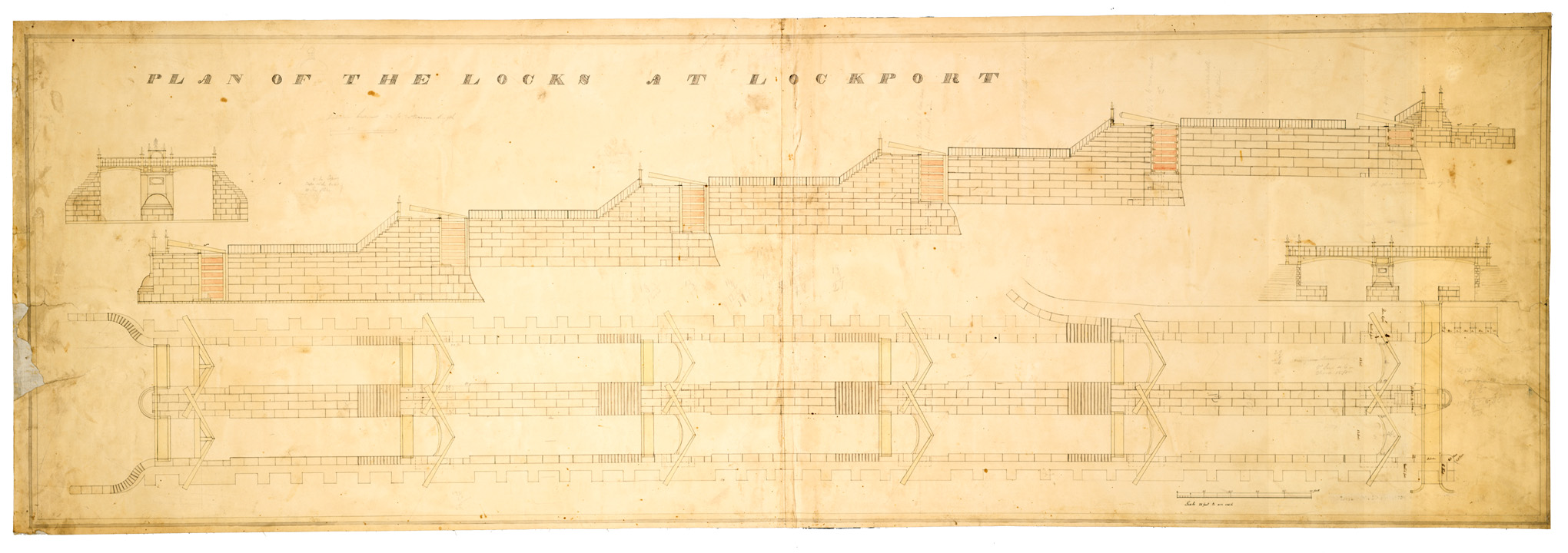 |
| Unidentified photo of canal with harnessed horses in foreground in Lockport, New York. (from: New York State Archives, correspondence and photographs from the Canal Investigating Commission, 1888-1912. | Close-up view of Lock 67 in a series of stairstep locks on the Erie Canal at Lockport. 1880-1910. (from: New York State Archives, Education Dept., Division of Visual Instruction, Instructional glass lantern slides, ca. 1856-1939) | Drawing of locks built on the Erie Canal at Lockport, Niagara County -- ca.1835-1862. (from: New York State Archives, Maps, plans, details, and drawings of structures and locations for work on the Erie, Genesee Valley, Chemung, and Oswego canals, Vol. 17, no. 2) |
 |
 |
|
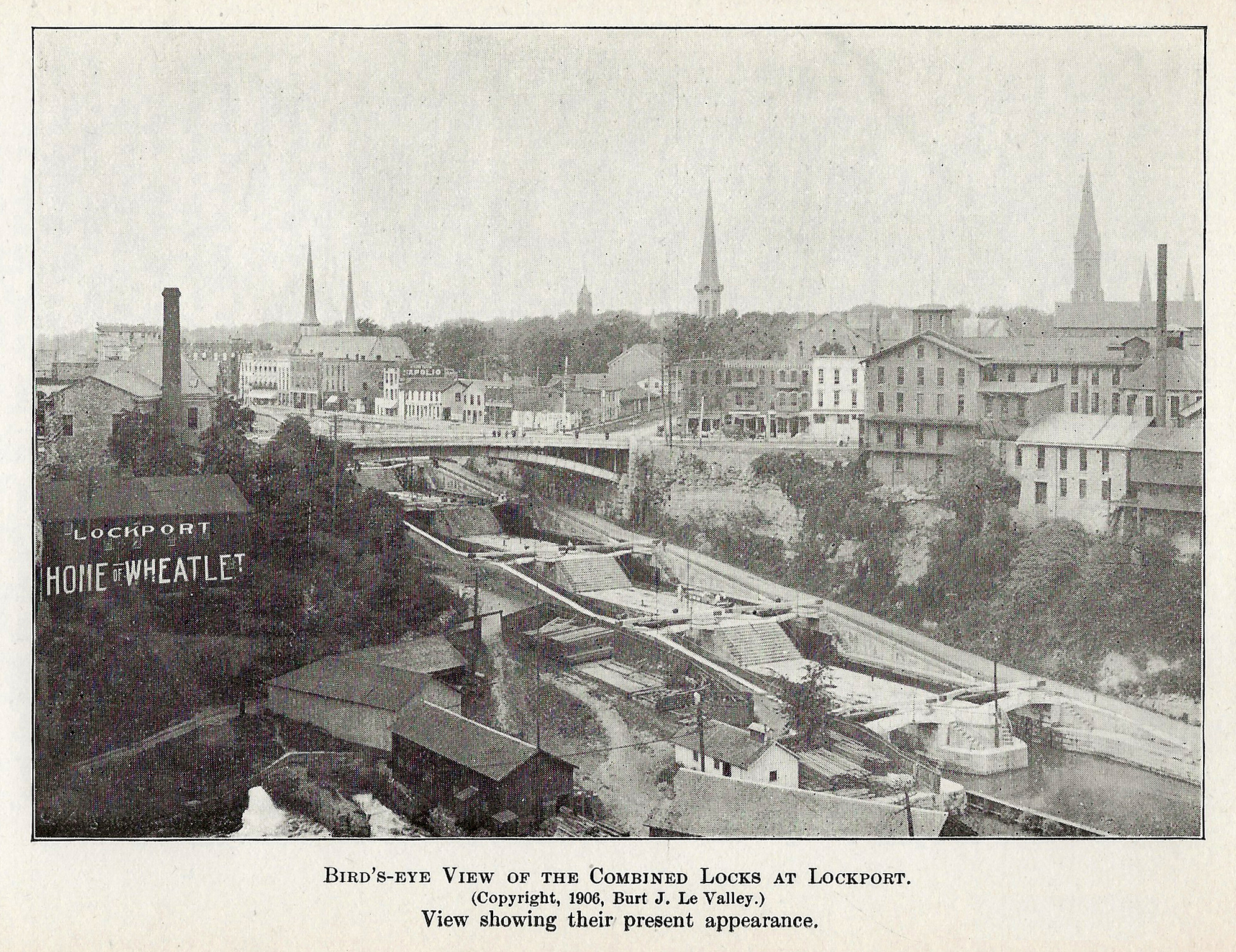
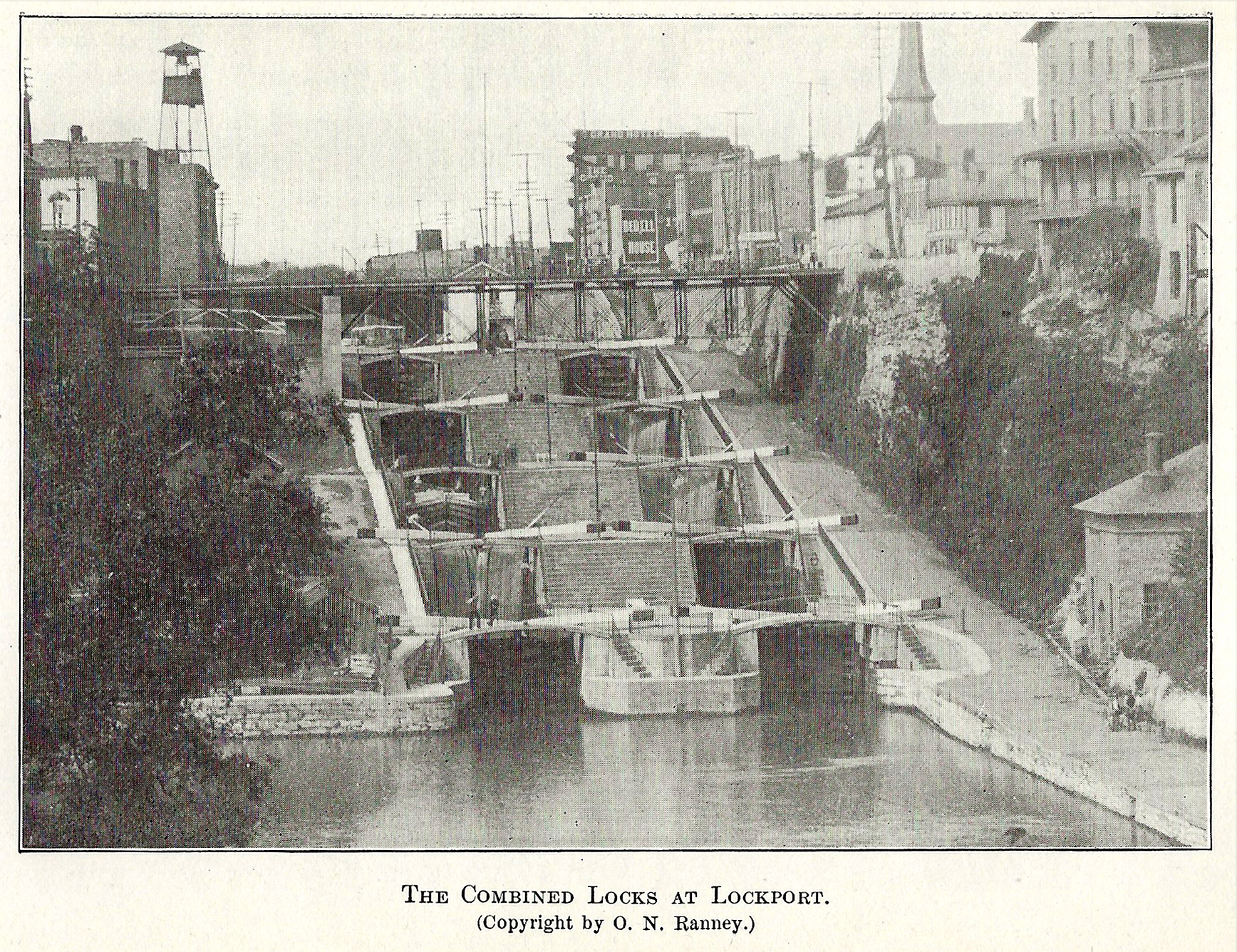
| "Bird's-eye View of the Combined Locks at Lockport" / Burt J. Le Valley, c1906. | "The Combined Locks at Lockport" / by O. N. Ranney, 1906. | |
| Both from: History of the Canal System of the State of New York ... / by Noble E. Whitford (Albany : Brandow Publishing Co., 1906) -- Left: vol. 1, facing p. 796; Right: vol. 1, facing p. 366. | ||
 |
 |
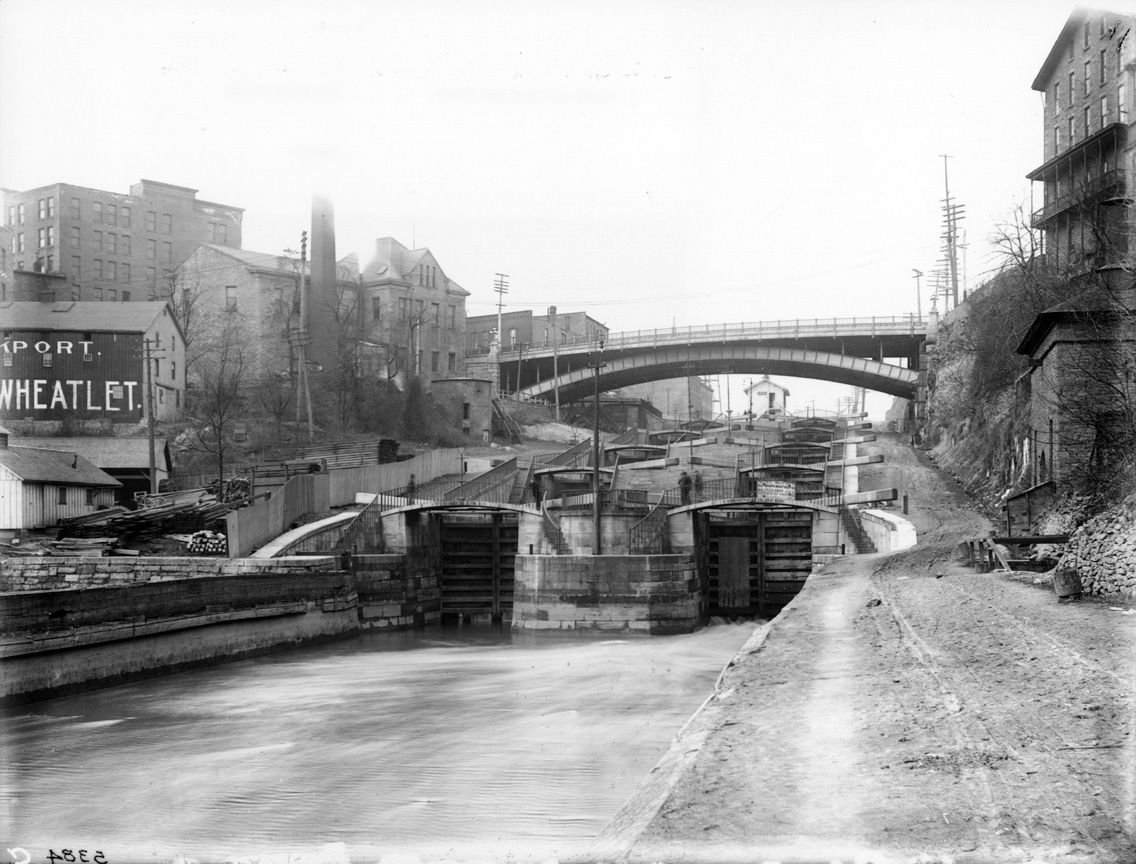 |
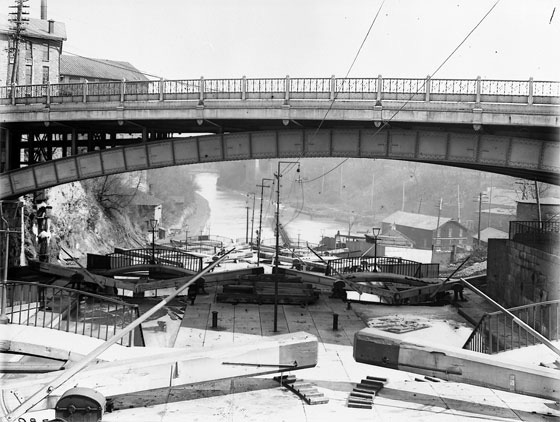
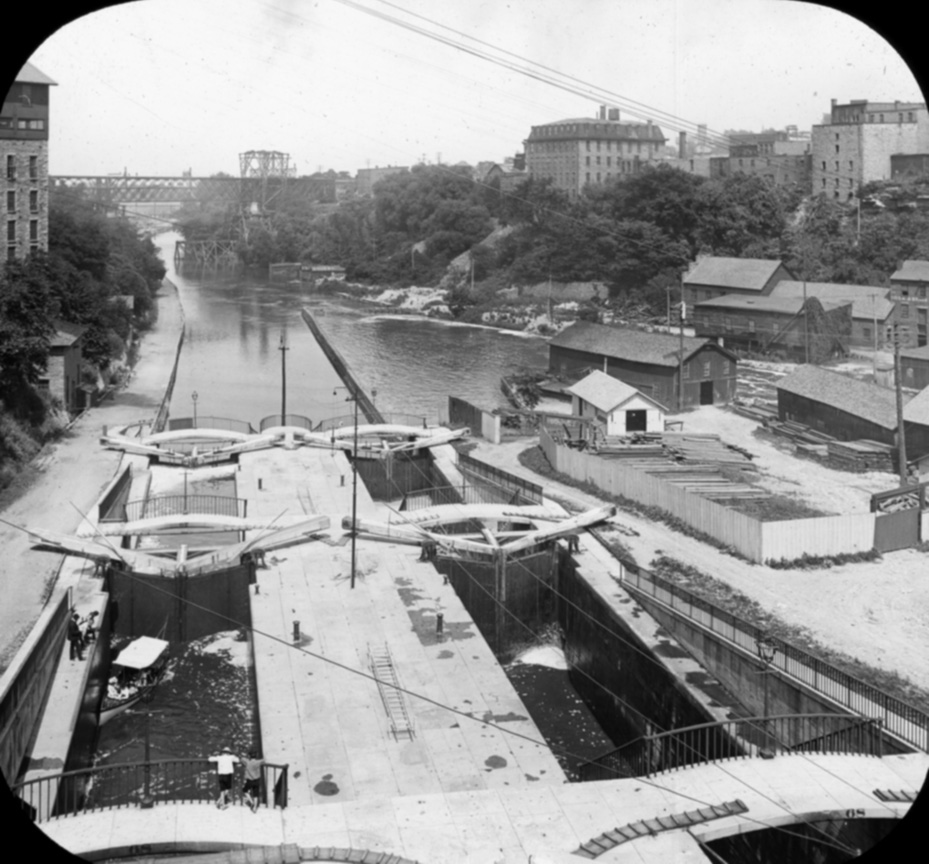
| Lockport Locks, from stairway of the Superintendent Office looking east, showing locks and Pine St. Bridge -- March 21, 1907. (from: New York State Archives, Education Dept., Division of Visual Instruction) | View from a bridge of the Erie Canal locks at Lockport, New York. (from: New York State Archives, Education Dept., Division of Visual Instruction) | Lockport Locks, from 22 feet east looking west - April 8, 1907. (from: New York State Archives, Education Dept., Division of Visual Instruction) |
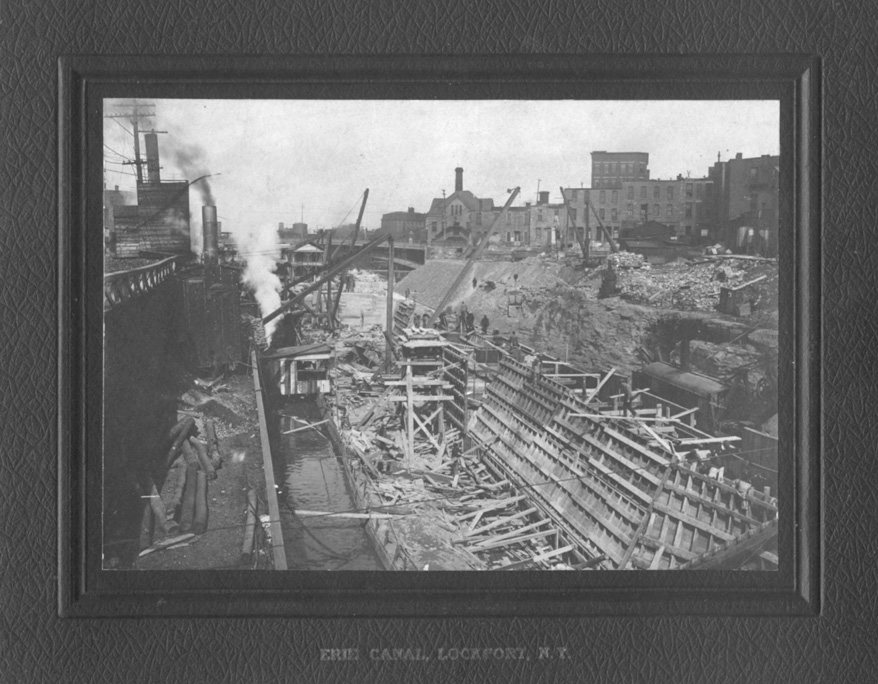 |
Left: "Erie Canal, Lockport, N.Y." -- Reconstruction of the Lockport Locks ; approximately 1910 (Courtesy of Stephen R. Bye, whose grandfather, Robert Bye of Olcott, N.Y., worked as a carpenter on the canal expansion). | |
|
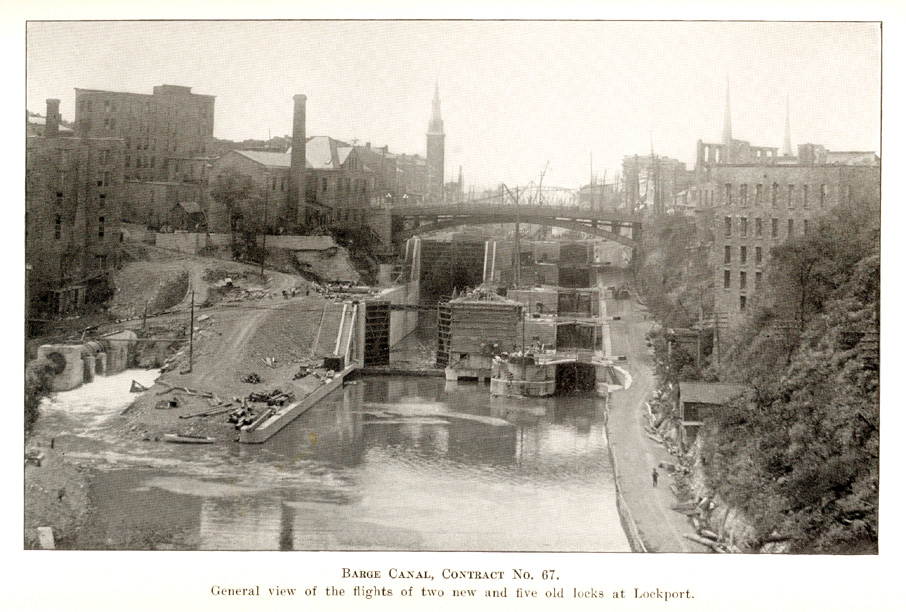 | |
| "Barge Canal Contract No. 67. View showing progress in constructing the flight of two locks at Lockport" -- from: Annual Report of the State Engineer and Surveyor of the State of New York for the fiscal year ended September 30, 1911 (Albany : Argus Co., printers, 1912) -- facing p. 202. | "Barge Canal Contract no. 67. General view of the flights of two new and five old locks at Lockport" -- from: Annual Report of the State Engineer and Surveyor of the State of New York for the fiscal year ended September 30, 1913 (Albany : J.B. Lyon Co., printers, 1914) -- facing p. 38. | |
 |
 | |
| "Barge Canal, Contract No. 67. View looking down through locks No. 35 and 34, at Lockport" -- facing p. 298. |
"Barge Canal, Contract No. 67. View from the lower gates
at lock No. 34, looking up through locks Nos. 34 and 35, at Lockport" -- facing p. 296. | |
| -- Both from: Annual Report of the State Engineer and Surveyor of the State of New York for the fiscal year ended September 30, 1915 (Albany : J. B. Lyon Co, printers, 1916). | ||
 |
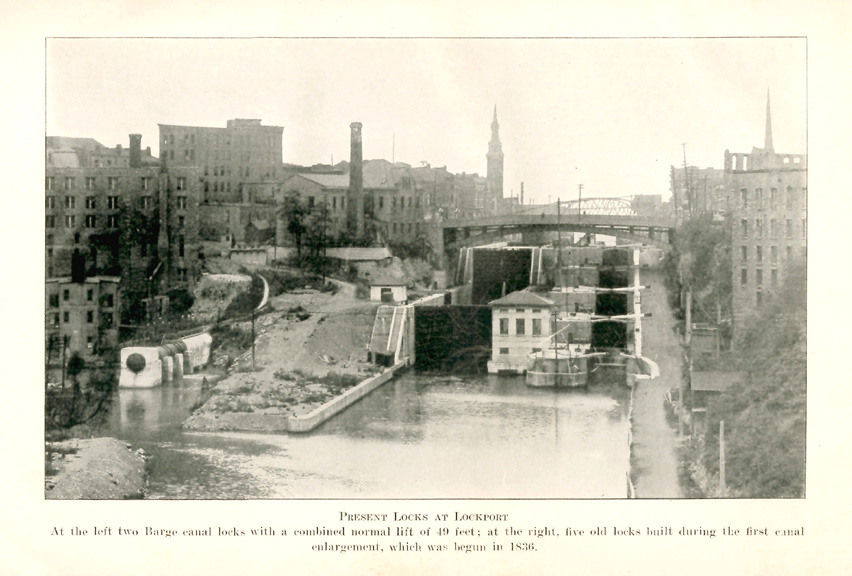 | |
| "Barge Canal, Contracts Nos. 67 and 94. View from the lower approach to lock No. 34, at Lockport" -- facing p. 302 | "Present Locks at Lockport" -- facing p. 14 | |
| -- both from: Annual Report of the State Engineer and Surveyor of the State of New York for the fiscal year ended September 30, 1915 (Albany : J. B. Lyon Co, printers, 1916). | ||
From the Robert N. Dennis Collection of Stereoscopic Views,
Courtesy of the Photography Collection, Miriam & Ira D. Wallach Division of Art, Prints &
Photographs,
The New York Public Library. (MFY Dennis Coll 91-F126)
(All images copyright The New York Public Library)
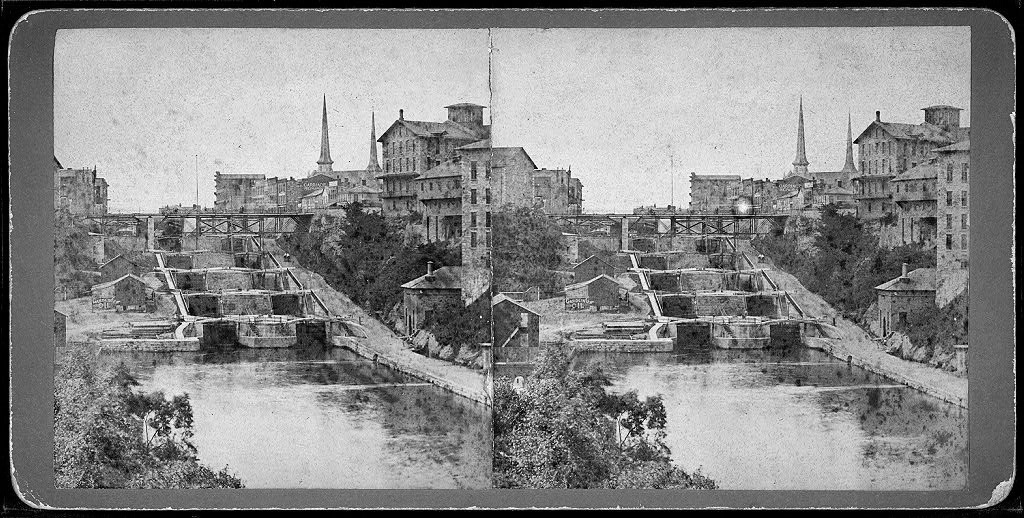 |
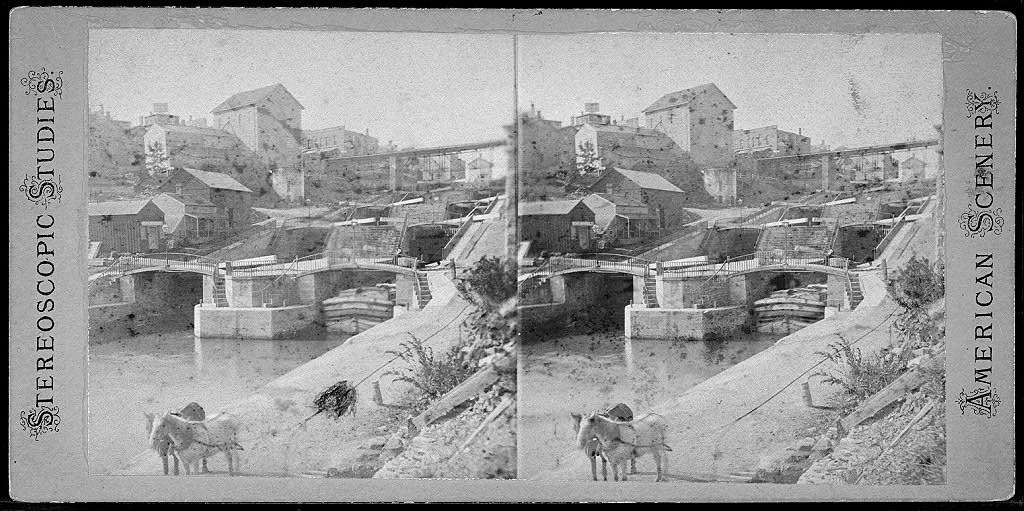 |
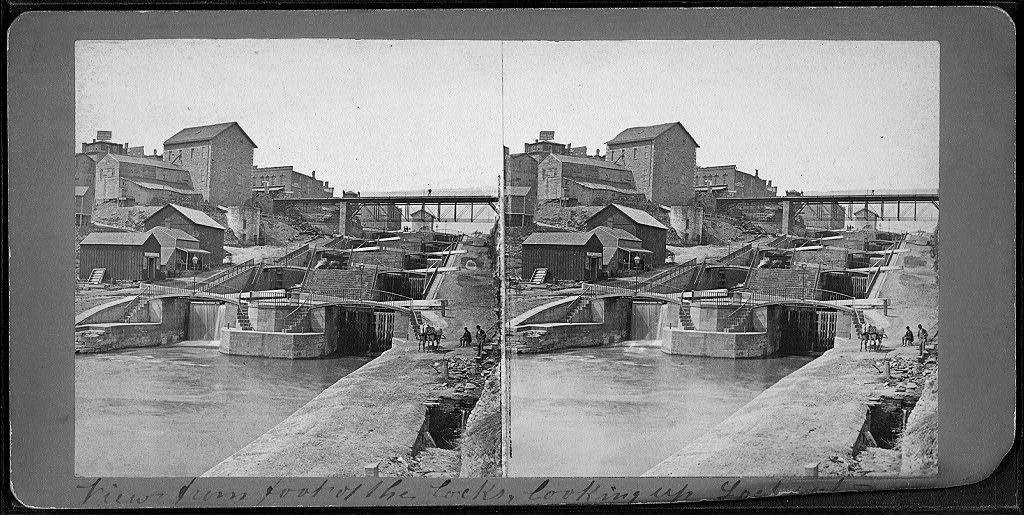 | |
| View of the Lockport Locks looking west (showing the original 5 pairs of locks). | View from foot of the Locks looking up the towpath. | ||
 |
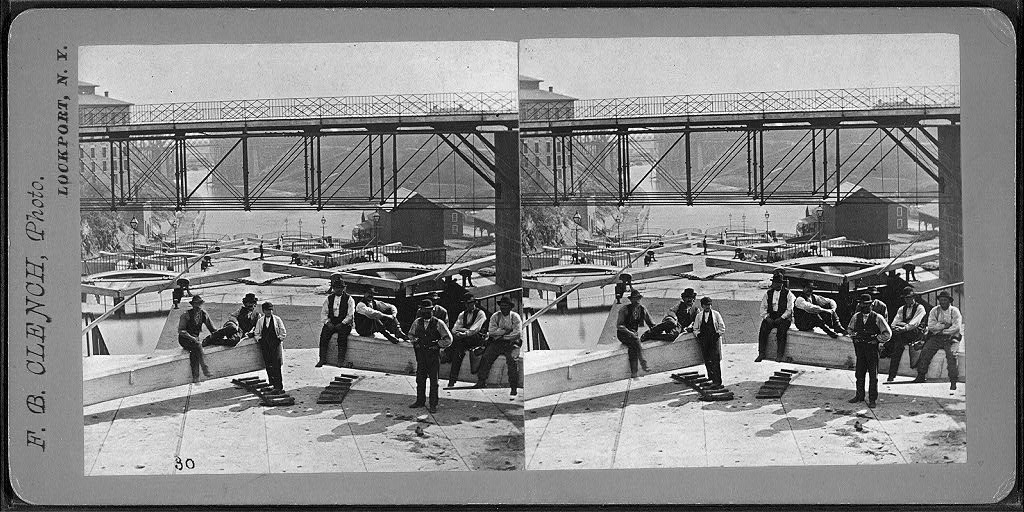 |
 | |
| Another view of the Lockport Locks looking northwest. |
View from top of the Locks with lock tenders. |
View of the Locks showing a boat locking through. | |
(NY-61-1 through NY-61-3, Jack Boucher, photographer, 1971 ;
NY-61-4 through NY-61-6, J. Carl Burke, photographer, 1970)
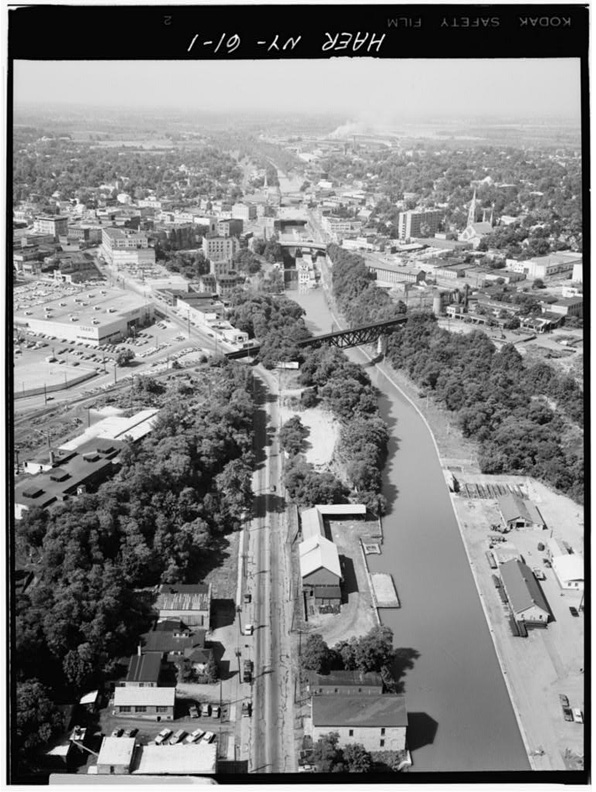 |
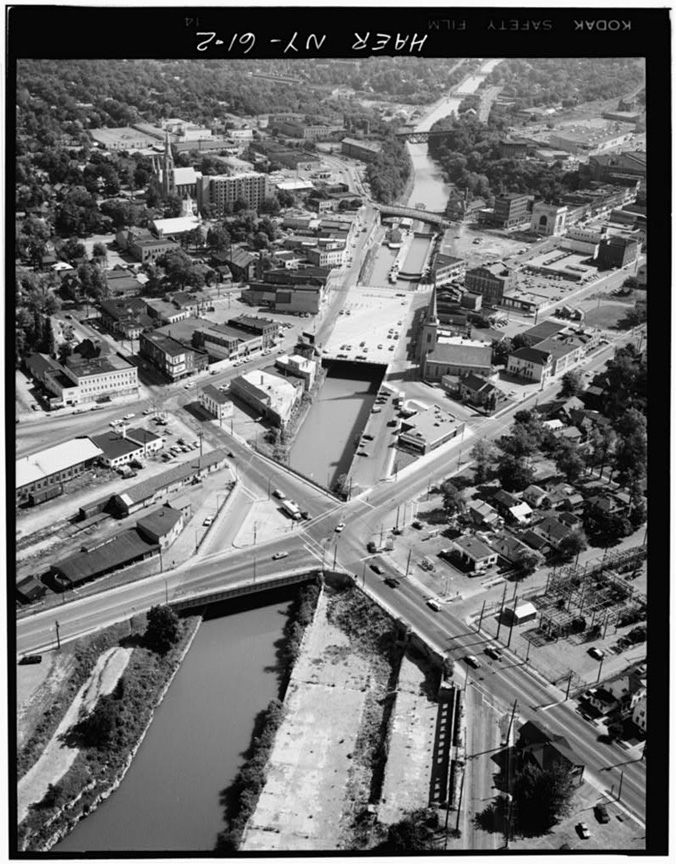 |
 |
| NY-61-1 -- Aerial view of Lockport looking southwest. New York State Barge Canal (Erie Canal) running through center of photo. Lockport locks in upper center of photograph. | NY-61-2 -- Aerial view of Lockport looking northeast. Locks visible in upper right side of photograph. | NY-61-3 -- Lockport locks. 19th-century locks visible on right; electric lift locks (1909-1918) visible on left. |
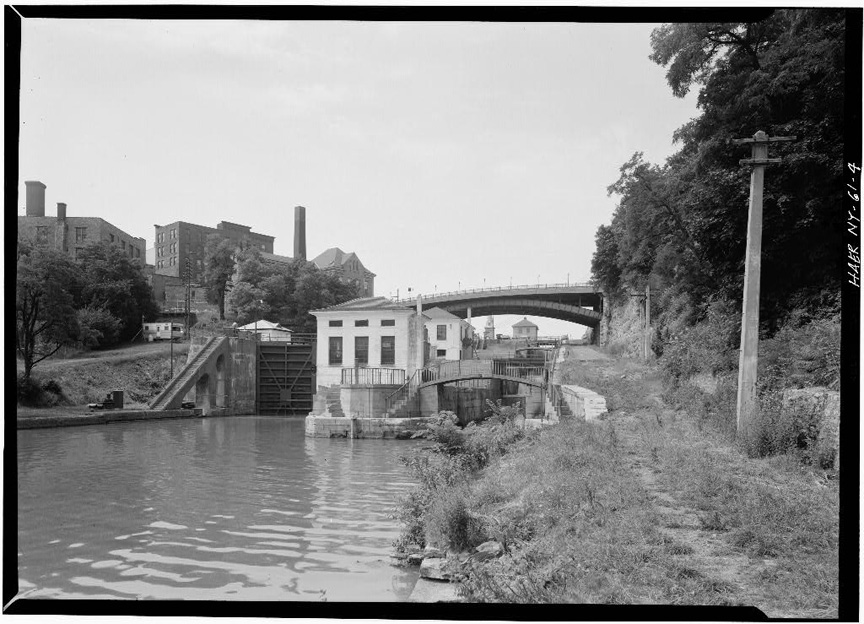 |
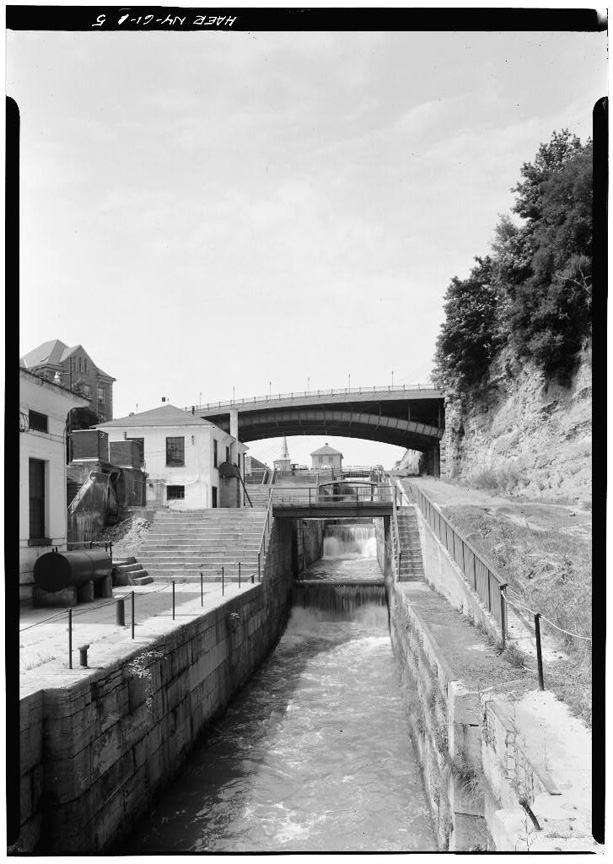 |
 |
| NY-61-4 -- Looking southwest towards locks. 19th-century gravity locks on right; 20th-century electric lift locks on left. | NY-61-5 -- View southwest showing 19th-century stepped locks. Note that their gates have been removed to allow passage of surplus water. | NY-61-6 -- View northeast looking down locks. Note limestone of canal wall. |
http://www.eriecanal.org/Lockport-1.html